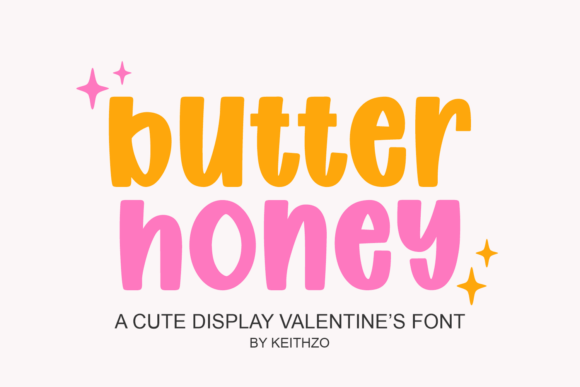
Butter Honey Font for Digital Branding Projects
I was working on a new landing page for a boutique online store that sells handcrafted soaps and natural skincare products. The brand needed a fresh look — something warm, inviting, and a little bit whimsical. I had just installed Butter Honey, a display font with an adorable and exuberant feel, and it immediately caught my eye. Its soft curves and sweet charisma felt like the perfect match for the project’s tone.
Testing Butter Honey in the Hero Section
The first place I dropped Butter Honey into was the hero headline. It reads “Naturally Nourishing Skincare” over a subtle background photo of a wooden table with jars of honey and beeswax candles. I wanted to make sure it didn’t get lost visually or become too hard to read at large sizes. To my surprise, even though it’s a decorative display font, its clarity is impressive. The letterforms are generous and spaced well, making it ideal for hero sections where you want to create a strong visual impact without sacrificing legibility.
On desktop, the text looked charming and bold. When I switched to mobile view, I adjusted the font size slightly to maintain balance against the smaller screen. But Butter Honey still held up beautifully — no distortion, no blurriness. That’s a big win for any web designer looking to use a creative font without compromising user experience.
Using Butter Honey for Boutique Website Headers
Next, I tried using Butter Honey for subheaders on product pages. The goal was to keep the main title in Butter Honey while using a more functional sans serif for body copy. This classic display font + clean body combo helped reinforce the brand’s personality while ensuring users could easily scan through descriptions and pricing.
I found that Butter Honey works best when used sparingly — as section headers or call-to-action buttons rather than full paragraphs. It adds a touch of warmth and approachability, which is exactly what the boutique needed to stand out from generic beauty sites. The font doesn’t scream “buy now,” but it whispers, “this is special,” which is powerful in branding design.
Butter Honey Over Image Banners
One of the biggest challenges with display fonts is how they perform over images. In this case, the client wanted a rotating banner featuring nature scenes — forest paths, lavender fields, and sunlit windows. I layered Butter Honey over these visuals and was pleased to see how it maintained visibility and charm across all variations.
For image overlays, I recommend keeping the font size above 40px and using solid or semi-transparent fills depending on the background contrast. Butter Honey’s open shapes help it breathe against busy textures, and the slight irregularity in stroke weight gives it character without making it harder to read.
Butter Honey for Logo Design and Brand Kits
I also experimented with using Butter Honey as the primary logo typeface. It wasn’t perfect right away — the font has enough personality that it can be overwhelming if not balanced correctly. After some tweaking, I paired it with a minimalist sans serif for the tagline and supporting text. This created a harmonious blend between the whimsy of Butter Honey and the clarity of a more straightforward font.
If you're considering Butter Honey for logo design, ensure you’re testing it in different contexts: dark mode, small sizes, and various color schemes. It’s a premium font with enough flexibility to adapt to your brand identity while maintaining its signature charm.
Butter Honey in Call-to-Action Buttons
When it came to CTA buttons like “Shop Now” or “Learn More,” I initially thought Butter Honey might be too playful. But after adjusting the weight and spacing, it worked surprisingly well. The rounded edges gave the buttons a friendly, non-threatening appearance, which aligned perfectly with the brand’s mission of being eco-conscious and gentle on skin.
For buttons, stick to the lighter weights and avoid overly ornate alternates. You don’t want the font to distract from the action itself. Butter Honey handles short phrases really well, and when combined with a warm color palette, it becomes a subtle yet effective motivator for clicks.
Font Pairing with Butter Honey
Pairing a display font like Butter Honey with other typography is crucial to creating a cohesive design system. I went with a modern sans serif for most body text and headings, which let Butter Honey shine without clashing. For a more editorial feel, a serif font could work too, especially if the brand wants to convey tradition or craftsmanship.
In terms of hierarchy, Butter Honey should always sit above the supporting typefaces in terms of visual interest. Use it for headlines, titles, and key messages, and reserve simpler fonts for everything else. This way, your layout stays scannable and professional, while still feeling creatively alive.
Butter Honey for Course Sales Pages and Landing Pages
Later in the project, I realized the same font could work wonders for a related course sales page the client planned to launch. They wanted to offer a digital class on natural soap-making, and Butter Honey added the perfect amount of charm and enthusiasm to the headline: “Create Your Own Soothing Soaps.”
On such pages, the font helps build emotional connection and curiosity. It’s not just about looking pretty — it’s about setting the mood. Butter Honey does that effortlessly. Just remember to limit its usage to key selling points and use a more readable font for course details and testimonials.
Butter Honey for Portfolio Websites and Creative Sites
I’ve since tested Butter Honey on a few portfolio websites and found it particularly effective for creative professionals who want to express a warm, artistic vibe. A photographer who focuses on food and lifestyle content loved how the font made her site feel both welcoming and high-end. She used it in the hero title and for project categories like “Culinary Photography” and “Wellness Lifestyle.”
It’s important to check the included styles before finalizing your layout. Butter Honey offers several weights and alternates, which means you can play with it in subtle ways — maybe a bolder version for titles and a lighter one for pull quotes. This attention to detail helps elevate the overall design quality and makes your brand feel more intentional.
Readability Tips for Mobile and Responsive Layouts
- Use Butter Honey only for headers and short text elements — not for long blocks.
- Test it at different sizes to find the sweet spot between charm and clarity.
- Avoid using it on small buttons or form labels where readability is critical.
- Consider its performance on dark backgrounds — a light or medium weight often looks better there.
- Optimize loading by using webfont versions and preloading key assets.
One thing I learned during testing is that even the most beautiful display font needs careful handling on mobile. Butter Honey’s delicate strokes can sometimes appear softer than intended, so adjusting the tracking and leading can help it pop more clearly on smaller screens.
Butter Honey for Branded Web Content and Campaign Pages
On campaign landing pages, Butter Honey helped set a joyful and engaging tone. One example involved a wellness campaign promoting homemade skincare rituals. The headline in Butter Honey was “Sweet Moments for Radiant Skin,” and it immediately drew the reader in with its warm aesthetic.
What stood out was how the font complemented the imagery and copywriting. It didn’t overpower the message but instead wrapped it in a sense of comfort and care. This kind of subtle influence is why I believe Butter Honey is more than just a decorative font — it’s a tool for building brand trust and emotional resonance.
Choosing the Right Weight and Style
While experimenting, I noticed that the heavier weights of Butter Honey are great for emphasis but can start to lose their elegance if overused. The lighter versions, on the other hand, offer a more delicate and inviting presence. If you’re designing a digital brand kit, consider offering clients options between the bold and regular styles depending on context.
Also, check if the font includes stylistic alternates or ligatures. These little touches can give your design that extra layer of polish, especially in logos or marketing banners. Butter Honey’s alternates are a nice bonus for those who want to add a personal touch without complicating the layout.
Commercial Font Licensing and Project Scope
Before recommending Butter Honey for a client project, I always double-check the licensing. As a commercial font, it’s essential to confirm whether the license covers web use, SaaS applications, or e-commerce platforms. Fortunately, Butter Honey is available in formats suitable for digital projects, including WOFF and TTF, which ensures compatibility and fast loading times.
Also, consider multilingual support if your audience spans different regions. While many display fonts struggle with extended language sets, Butter Honey seems to handle them gracefully, making it a solid choice for international brands or global campaigns.
Butter Honey for Blog Redesign and Editorial Design
Recently, I used Butter Honey in a blog redesign for a lifestyle writer focusing on slow living and mindfulness. The blog’s header was transformed with a custom title in Butter Honey — “Savor the Sweetness of Now.” The font became the anchor of the entire redesign, guiding the color choices, spacing, and overall aesthetic.
Even though it’s a display font, Butter Honey can inspire consistency in your brand identity. Once you choose it as a headline font, you can base your secondary headers and accents off of its characteristics. This creates a unified look that feels both professional and personable — something every blog or editorial site should aim for.
Final Notes on Using Butter Honey in Real Projects
After using Butter Honey across multiple website projects, I’ve come to appreciate its versatility. It’s not limited to just one niche — whether you're designing for a coaching website, product landing page, or digital brand kit, it adapts well. However, its strength lies in short, impactful phrases rather than dense paragraphs or data-heavy layouts.
If you're a web designer or UI creator looking to inject a bit of charm into your next project, Butter Honey is worth a test run. It’s a display font that feels modern, yet nostalgic; elegant, yet accessible. And in today’s competitive digital landscape, having a font that stands out while staying usable is a rare and valuable asset.
So, if you're ready to bring a soft, sweet charisma to your designs — whether it's for a hero section, logo text, or branded landing page — Butter Honey is a display font that delivers both style and substance.