Good Cheer Font Review: A Bubbly Typeface for Playful Branding
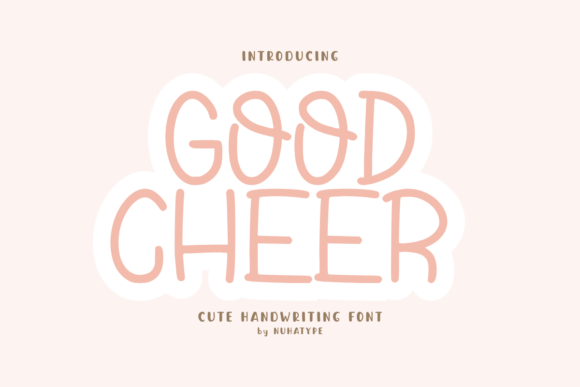
It was a typical Monday morning when I opened up my brand board for a new project — a local café looking to refresh its visual identity. The client wanted something warm, inviting, and full of life. That’s when I stumbled upon Good Cheer, a fun and bubbly Cute Handwriting Font. As someone who’s tested dozens of typefaces over the years, I can confidently say that Good Cheer stands out in the world of handwritten fonts. It’s not just another freebie; it brings an instant sense of happiness and excitement to any design context.
Good Cheer on a Café Logo and Shop Sign
I started by placing Good Cheer on a logo concept for the café. The letters are plump and bouncy, with a wide, open structure that gives them a cheerful and approachable feel. It immediately brought to mind the kind of vibe you’d want from a place like a neighborhood bakery or juice bar — friendly, welcoming, and a little bit whimsical. When I scaled it up for a shop sign mockup, it still held its charm without feeling cluttered or overwhelming. Its playful nature worked perfectly for a small business aiming to stand out with personality-driven branding.
Compared to other handwritten fonts I’ve used, Good Cheer has more consistent spacing and a slightly more structured rhythm, which is rare in this category. This balance between looseness and clarity makes it versatile enough for both digital and print applications.
Good Cheer Fonts in Packaging Design and Product Labels
Next, I tested Good Cheer on product labels for the café’s new line of herbal teas and smoothie bowls. The font added a sense of joy and authenticity to the packaging. The open structure allowed for easy legibility at a glance, even when paired with smaller supporting text. I found myself using it as a headline or accent font rather than body copy — it shines brightest in short bursts of text.
In one case, I placed it on a sticker-style label for a seasonal latte. The result? A label that felt handcrafted, which aligned well with the brand’s values. But I also noticed that if used too often or in long paragraphs, it lost some of its readability. So while it’s perfect for decorative touches, it's not ideal for dense information on labels.
Design Tip: Use Good Cheer for Short Phrases
- Product names
- Call-to-action tags
- Seasonal promotions
- Handwritten-style accents
Good Cheer Freebies for Social Media Layouts and Web Headers
Social media graphics were where Good Cheer really came into its own. On Instagram posts promoting the café’s weekend specials, it created a bright, upbeat tone. I used it for headers and titles, always ensuring there was a strong contrast against background colors. The wide character spacing made it pop on mobile feeds, and the rounded shapes gave the designs a soft, inviting edge.
On a website header mockup, I combined Good Cheer with a clean sans serif font for navigation. This pairing helped maintain a balance between creativity and usability. The homepage hero section benefited greatly from Good Cheer’s bold presence — it conveyed warmth and energy, exactly what the client wanted for their online storefront.
Font Pairing Suggestions with Good Cheer
- With a Serif Font: Adds elegance to casual designs (e.g., Great Vibes + Lora)
- With a Sans Serif Font: Keeps the layout modern and functional (e.g., Montserrat or Raleway)
- With a Script Font: Creates a layered, artistic look (e.g., Alex Brush or Allura)
Good Cheer for Business Cards and Brand Identity Projects
Business cards are all about making a memorable first impression. I tried Good Cheer as the main headline for the café’s card, and it worked surprisingly well. The font’s friendly tone complemented the brand’s mission to create community through great coffee and pastries. However, I did switch to a more standard typeface for contact details and taglines — keeping the core information clear and scannable.
In broader brand identity work, Good Cheer served as a secondary typeface in mood boards and creative explorations. It wasn’t the main system font, but it played a key role in establishing the brand’s voice. Think of it as the “personality” layer in your typography stack — something that adds character without sacrificing professionalism.
When Not to Use Good Cheer
While Good Cheer is a fantastic addition to many projects, it’s important to know its limitations. Here are a few situations where it might not be the best choice:
- Long-form content such as blogs or brochures
- Corporate or formal brand identities
- Small-sized text where readability drops
- Projects requiring strict typographic consistency across multiple languages
These aren’t deal-breakers, but they’re considerations. If you're building a luxury brand or a legal firm’s identity, Good Cheer may not fit the bill. But for lifestyle brands, creative shops, and personal businesses, it's a winner.
Testing Good Cheer Before Finalizing Client Work
As a designer, I always recommend testing a font across different platforms before locking it in. For Good Cheer, I printed a sample business card, viewed the logo on a phone screen, and checked how it rendered in web design. Each time, I noted the performance and made sure it aligned with the brand’s goals.
You can test Good Cheer for yourself by downloading it as part of a Freebies package and applying it to your next mockup. Try it on social media templates, packaging drafts, and signage layouts to see how it behaves under real-world conditions.
Practical Steps for Testing Good Cheer
- Download the font and install it locally
- Create a multi-format brand board (print, digital, web)
- Use it in headlines, logos, and short phrases
- Test it in various sizes and weights
- Evaluate how it pairs with your base typeface
Commercial Use and Licensing Notes for Good Cheer
If you're planning to use Good Cheer in client work, especially for commercial branding, packaging, or digital products, make sure to review the font’s licensing terms. Some Fonts labeled as “free” might only allow limited use. Always check whether the version you have access to supports commercial applications like print-on-demand merchandise, websites, or editorial design assets.
If you find a premium version available, consider investing in it to ensure legal usage and access to extended features like multilingual support or alternate characters. This step is crucial for maintaining your credibility and protecting your clients’ interests.
Good Cheer in Editorial and Creative Studio Designs
I also experimented with Good Cheer in editorial design for a handmade gift catalog. Used sparingly in chapter titles and feature headings, it added a personal touch without being distracting. In a creative studio identity project, it became the signature element in a team member’s nameplate and event announcements — perfect for showcasing individuality within a professional setting.
Its informal yet polished look makes it suitable for crafters, bloggers, and small publishers who want to inject some warmth into their layouts. Just remember to pair it with a solid, readable font for body copy to maintain hierarchy and flow.
Real-World Impressions of Good Cheer
What I love most about Good Cheer is how quickly it elevates a design. It doesn’t require much tweaking to feel right at home in a variety of contexts. Whether it’s a Fonts enthusiast looking to add a playful twist to their portfolio or a brand designer wanting to bring more emotion into a project, Good Cheer delivers with ease.
Its personality is infectious — think of it as the smiley emoji of typography. It works best when used intentionally and sparingly, but when it fits, it fits perfectly. And let’s face it, we could all use a little more cheer in our design toolkit.