Army Box Font: A Rugged Typeface for Editorial Design
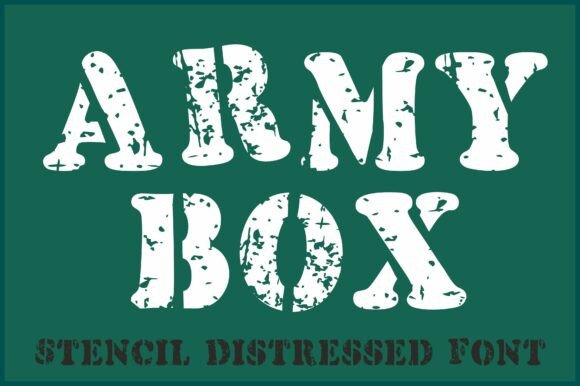
There’s a moment in every editorial design project when you know it needs more character. You’ve lined up your body copy, chosen your color palette, and even picked the perfect background texture — but something still feels flat. That was me last week, deep into redesigning a digital magazine cover for a military lifestyle blog. I needed a font that could carry the weight of the theme without shouting at the reader. Enter Army Box, a bold and powerful stencil distressed font inspired by authentic military lettering. From the first glance, its rough, weathered texture and strong shapes brought the right amount of grit to the layout.
Army Box for Magazine Covers and Bold Branding
In editorial publishing, the cover is often the first point of contact between the publication and its audience. For my latest digital magazine layout, Army Box proved itself as a compelling choice for headlines and cover text. Its rugged edges and structured form gave the piece an authoritative presence while maintaining enough visual interest to stand out among other publications. As a display font, Army Box doesn’t demand legibility in long blocks of text — instead, it commands attention in short bursts, making it ideal for titles, chapter openers, or pull quotes.
The personality of Army Box leans into authenticity and strength. It’s not just another decorative typeface; it tells a story through its letterforms. The subtle imperfections mimic real-world wear, which can be especially effective in themes related to adventure, outdoors, or military culture. Whether you’re designing a Fonts section in a print catalog or creating a feature page for a digital zine, this font adds depth and intentionality to the typographic choices.
Using Army Box in Blog Headers and Newsletter Graphics
I recently tested Army Box in a client's newsletter header and found it strikingly effective. The font’s high contrast and angular strokes helped it cut through the clutter of promotional graphics and text blocks. Readers immediately noticed the headline, which is one of the key goals in email marketing and content publishing. As a display font, Army Box works best at larger sizes where the details can breathe and the mood can resonate.
For bloggers, especially those in niches like travel, fitness, or outdoor lifestyles, using Army Box in headers or article titles can help establish a distinct brand identity. It’s not for everyone — if your blog has a soft, minimalist aesthetic, this might clash — but if your content reflects strength, resilience, or a no-nonsense attitude, Army Box fits perfectly. I paired it with a clean sans serif for navigation and captions, which balanced the aggressive tone of the main heading with something more approachable and functional.
Readability on Screen and in Print
When evaluating any Fonts for editorial use, readability across platforms is crucial. Army Box holds up well on screen at large sizes, thanks to its clear negative space and strong stroke contrast. However, like most display fonts, it struggles when scaled down for small captions or dense paragraphs. I recommend reserving it for visual hierarchy elements such as pull quotes, subheadings, or chapter titles where it can make an impact without overwhelming the reader.
In print materials, Army Box has a unique charm. When printed at 36pt or higher, the distressed texture gives a tactile quality that digital-only designs often miss. But again, smaller text sizes can lead to loss of clarity. If you're printing a Fonts collection or a themed brochure, ensure you test how it looks in various weights and at different resolutions before finalizing your layout.
Army Box in Recipe Ebooks and Printable Planners
Surprisingly, Army Box also worked well in a recipe ebook I was working on for a cooking influencer with a rugged, no-frills style. Used sparingly for chapter headings and title pages, it added a sense of durability and tradition — qualities that resonated with the blogger’s audience. The challenge here was to avoid overusing it in sections where recipes require clear instructions. Instead, I limited it to front matter and back covers, pairing it with a readable serif font for the actual content.
Similarly, in a printable planner designed for productivity and goal-setting, Army Box served as a great accent for motivational pull quotes and section dividers. The font’s boldness made these elements pop, reinforcing the message of determination and action. It was especially effective in worksheet layouts where each section required a strong visual anchor. Just remember to check the included styles and alternates — having multiple versions of the same character can add versatility to your design toolkit.
Font Pairing and Design Consistency
One of the joys of using a creative Fonts like Army Box is finding the right partner to complement it. In my projects, I've found success combining it with a modern sans serif for body text and navigation bars. This contrast helps maintain design consistency while ensuring the rest of the layout remains accessible. For example, in a recent coaching workbook, Army Box was used for the title and section headers, while a neutral typeface handled the explanations and exercises.
It’s also worth noting the importance of commercial licensing when using Army Box in paid newsletters, course PDFs, or digital downloads. Always confirm whether the font supports the intended use case and includes multilingual support if your publication reaches a global audience. File formats matter too — I prefer TTF or OTF for printables and web-safe formats like WOFF for online publications.
Limitations and Best Practices with Army Box
While Army Box shines in many editorial contexts, it isn’t suited for all. Avoid using it for body copy or small-scale text in reports, tutorials, or guides where readability is paramount. Its expressive nature makes it unsuitable for dense paragraphs or fine print. Instead, think of it as a visual punctuation mark — a tool to highlight, not to narrate.
I’ve seen some designers attempt to stretch Army Box beyond its natural limits, trying to use it in infographics or tabular data. It rarely works. Stick to what it does best: drawing attention in display roles. Use it in blog headers, newsletter banners, and magazine covers where it can serve as a strong typographic statement without being distracting.
Creating Visual Hierarchy with Army Box
Visual hierarchy is the backbone of good editorial design, and Army Box plays a critical role in building it. Its bold weight and stenciled appearance naturally draw the eye, making it excellent for breaking up content and guiding readers toward key points. In a multi-page digital magazine layout, I used Army Box to introduce each new section, helping users quickly identify where to turn their attention next.
What I appreciate most is how it maintains a consistent tone throughout the design. Once established as the primary Fonts for headlines, it becomes part of the publication’s identity. That kind of consistency is invaluable for branding, especially when you want your content to feel cohesive and professional. It’s not just about aesthetics — it’s about building trust with the reader through thoughtful typography choices.
Final Uses and Creative Possibilities
If you’re considering Army Box for your next layout, ask yourself where you need a bit of edge. Could it elevate a wedding guide with a military twist? Or perhaps it’s the perfect fit for a digital magazine focused on survival skills or tactical gear? In these scenarios, the font’s raw energy aligns beautifully with the subject matter.
I’ve also used it creatively in logo design for indie brands aiming to communicate strength and authenticity. While it’s not a universal solution, it certainly adds a distinctive voice to the visual language of a publication. Whether you're building a brand from scratch or updating a long-standing newsletter, Army Box offers a fresh way to express authority and individuality through Fonts.
Remember to always test Army Box in context. Download it, try it out in your current design software, and see how it behaves in real-life applications. Typography is never just about looking good — it’s about feeling right. And with Army Box, the feeling is unmistakably bold, purposeful, and ready for action.