Furious Race Display Font for High-Impact Editorial Design
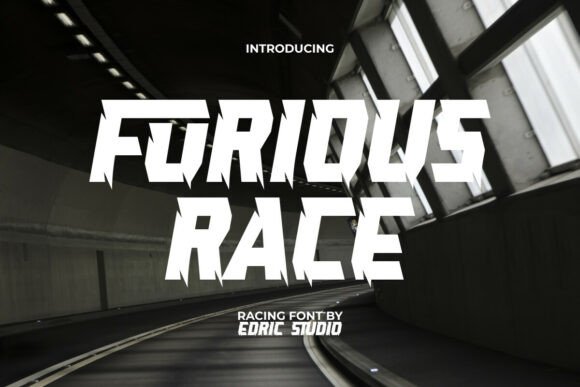
There’s a moment in every design project when the right font can transform an ordinary layout into something that commands attention. I recently found myself redesigning the header of a digital magazine focused on urban culture and adrenaline-fueled lifestyles. The goal was to elevate the visual energy while maintaining clarity and editorial integrity. That’s when I discovered Furious Race, a bold, high-impact display font that exudes speed, power, and raw energy. As a blogger and editorial designer who values both aesthetics and readability, I wanted to explore how Furious Race could fit into various content creation scenarios.
Furious Race for Magazine Covers and Bold Branding
In the world of editorial design, a magazine cover is often the first point of contact between the publication and its audience. It needs to be memorable yet legible enough to communicate the title clearly. Furious Race delivers precisely this balance with its dynamic strokes and aggressive character shapes. While it may not be suitable for long-form reading, it shines in short bursts of text like titles and headlines.
I tested Furious Race on a mock-up for a new issue titled “Rush Hour: The City at Full Throttle.” The font’s sharp angles and kinetic flow gave the cover a sense of urgency and motion that matched the theme perfectly. Its personality didn’t overpower the supporting imagery — instead, it enhanced the mood by drawing the eye directly to the title. For designers working on digital magazines, lifestyle publications, or any print-to-digital crossover project, Furious Race can become a cornerstone of your brand identity.
Furious Race in Newsletter Headers and Social Media Graphics
Newsletters and social media posts benefit from fonts that can make a statement without sacrificing clarity. When I applied Furious Race to a newsletter header for a fitness blog, it immediately added a punchy, energetic feel that aligned well with the blog’s mission of pushing boundaries. Readers were more likely to pause and engage with the message because the font visually communicated intensity and drive.
The same goes for social media graphics. Whether you’re promoting a new article or sharing a quote, using Furious Race as a headline font can help cut through the noise. Its high contrast and stylized forms work especially well on platforms like Instagram and Facebook where visuals need to stand out quickly. Just remember to pair it carefully with a secondary font that complements its strength but doesn’t compete for attention.
Furious Race for eBook Titles and Pull Quotes
When creating an eBook or digital course, the title is everything. A strong typeface can convey the tone of the entire piece before a single word is read. In one recent project, I used Furious Race for the title of a workout guide called “The Speed Zone: Train Faster, Live Bolder.” The font’s commanding presence made the title feel urgent and powerful, which was exactly the impression we wanted to set.
Another effective use case I encountered was in pull quotes. These are typically used to highlight key phrases or impactful statements within longer articles. By setting a few strategic pull quotes in Furious Race, I was able to emphasize the most compelling parts of the text without disrupting the overall design rhythm. This helped create a stronger visual hierarchy and guided readers toward the most important information.
Furious Race in Blog Headers and Worksheet Layouts
Blog headers often serve as the gateway to a post, so they need to be both inviting and informative. On a personal development blog I redesigned, Furious Race worked wonders for the main header above each featured article. The font’s assertive style supported the blog’s focus on taking action and breaking barriers, making each post feel more intentional and driven.
For worksheet layouts and printable planners, I found that Furious Race could be used sparingly to label sections or highlight motivational prompts. Think of it as a stylistic accent rather than a full-scale typographic solution. For instance, a section titled “Your Daily Grind” became much more engaging when set in Furious Race. It encouraged interaction and added a layer of excitement to what could otherwise be a mundane format.
Readability and Practical Use of Furious Race
Despite its high-energy vibe, Furious Race holds up surprisingly well in terms of readability when used appropriately. The letterforms are distinct enough to remain legible at smaller sizes, although it performs best in larger formats such as headlines, banners, and chapter openers. I noticed that when paired with proper spacing and contrast, the font could even be used in short captions or call-out boxes without causing strain.
However, it’s crucial to understand the limitations of a display font like Furious Race. It’s not ideal for body copy, small text, or dense paragraphs. Its expressive nature makes it unsuitable for formal reports or academic writing. But in the context of a modern blog post, a digital magazine spread, or a high-impact newsletter graphic, it adds just the right amount of flair without overwhelming the reader.
Font Pairing Tips for Editorial Projects
To maintain a professional and balanced look in your layouts, consider pairing Furious Race with a clean sans serif or readable serif font for supporting text. In my tests, combining it with Helvetica Neue for captions and Lora for body copy created a harmonious contrast. The aggression of Furious Race was softened by the neutrality of the others, allowing it to act as a focal point rather than a distraction.
This kind of thoughtful font pairing is essential for building a cohesive publication identity. If you're designing a wedding guide, for example, you might want to use Furious Race for a bold feature headline while keeping the rest of the text in softer, more elegant styles. The same principle applies to recipe e-books, coaching workbooks, or digital magazines where visual impact meets practicality.
Technical Considerations Before Using Furious Race
Before integrating Furious Race into any commercial or client-facing project, it’s important to check what styles, alternates, and ligatures come included. Many premium fonts offer variations that allow for customization and consistency across different platforms. Since Furious Race is a display font, it may not have multiple weights or extensive language support, so always confirm the details before finalizing your layout.
Also, ensure that the licensing terms align with your intended use. If you plan to include it in a paid newsletter, a digital course PDF, or a branded template, verify whether the font supports those applications. File formats matter too — if you're exporting to print or creating web-based materials, having access to both TTF and OTF versions will give you more flexibility.
Why Choose Furious Race for Your Next Project
If you’re looking for a Fonts package that brings energy and emotion to your designs, Furious Race is worth considering. It’s perfect for projects that require a strong editorial voice — think lifestyle blogs, workout guides, or digital features about racing and performance. The font doesn’t just add visual interest; it enhances the narrative by subtly reinforcing the themes of speed, determination, and boldness.
Its versatility allows it to function effectively in both digital and print environments. From mobile-friendly headers to high-resolution print covers, Furious Race maintains its integrity across mediums. And when used correctly, it helps establish a consistent and memorable brand identity that resonates with your target audience.
So next time you’re choosing a font for a cover, a pull quote, or a section heading, ask yourself: does this font match the mood? Does it support the message? With Furious Race, the answer is often yes — provided you know where to place it.
Give it a try in your next editorial layout or branding project. You might just find that Furious Race is the missing element your designs have been waiting for.